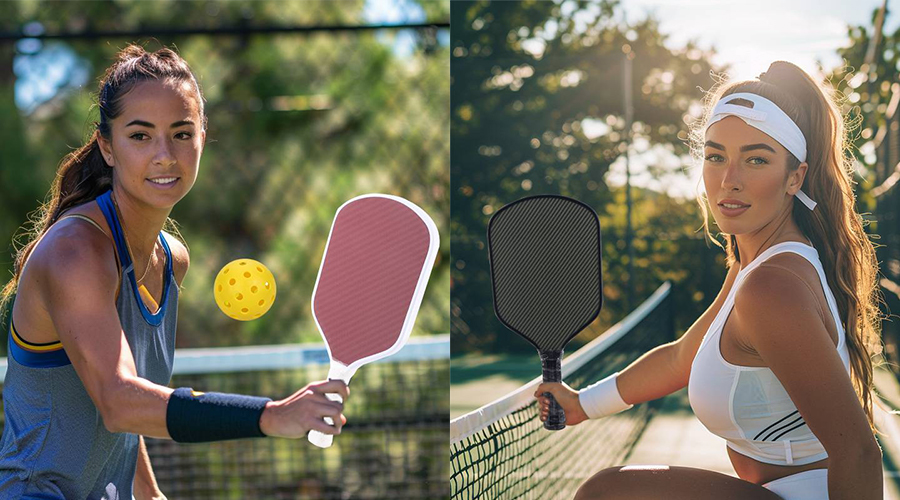
Pickleball, a dynamic paddle sport, blends elements from tennis, badminton, and table tennis, gaining popularity among all ages. Mastering its fundamentals, notably proper paddle grip, is key to enhancing game performance. This article guides readers through essential grip techniques, emphasizing its pivotal role.
Pickleball Paddle Grip Basics
The foundation of effective pickleball play starts with a solid understanding of basic paddle grip techniques. Here’s how to hold your paddle correctly:
1.Handshake Grip: This is often the starting point for beginners.
- Step 1 : Imagine you are shaking hands with the paddle. Wrap your fingers around the handle with your thumb resting on one side and your fingers on the other.
- Step 2 : The V formed by your thumb and index finger should point towards the edge of the paddle.
- Step 3 : Maintain a firm yet relaxed grip, allowing for maneuverability and control.
2.Paddle Positioning:
- Ensure the paddle face is perpendicular to the ground when you are in a ready position.
- Your non-dominant hand should support the paddle during positioning and preparation for shots.
Following these steps will help you develop a comfortable and effective paddle grip, setting the stage for more advanced techniques.
Advanced Grip Techniques
As you progress in pickleball, experimenting with different grip styles can significantly improve your game. Here are some advanced grips to consider:
1.Eastern Grip:
- Usage : This grip is commonly used for forehand strokes.
- Technique : Place the base knuckle of your index finger and the heel of your hand on the third bevel of the paddle handle. This position resembles the "shake hands" grip but with a slight shift.
- Advantages: Provides a good balance of power and control, ideal for baseline play and groundstrokes.
2.Continental Grip:
- Usage : Suitable for both forehand and backhand shots, as well as serves and volleys.
- Technique : Hold the paddle so that the base knuckle of your index finger is on the second bevel of the handle. This grip is similar to holding a hammer.
- Advantages : Versatile and efficient for quick transitions between different types of shots, making it a favorite among advanced players.
Understanding and practicing these grips can enhance your adaptability and effectiveness on the court, allowing you to respond better to different game situations.
Tips and Tricks for Grip Success
To truly master your paddle grip, consider these additional tips:
1.Grip Adjustments:
- Low Balls : When you need to hit a low ball, you may need to lower your grip position and angle the paddle face downward to hit a higher arc.
- High Balls : For balls above net height, raise your grip position and tilt the paddle to apply more topspin, controlling the ball’s drop.
- Power Shots : When hitting with full force to create an offensive play, tighten your grip to ensure the paddle stays stable at impact. However, avoid gripping too tightly to prevent wrist strain.
- Drop Shots and Spin : For these delicate wrist movements, you may need to loosen your fingers to allow the paddle face to move freely, creating variations in speed and spin.
- Serves : When serving, you might use a different grip to optimize power and control. For example, some players prefer a looser grip for consistent, controlled serves.
- Quick Reactions : When facing sudden attacks from your opponent, maintaining a flexible grip that can quickly change positions is helpful.
2.Grip Pressure:
- Avoid holding the paddle too tightly, as this can lead to tension and reduce control. A relaxed grip helps with fluidity and precision in your shots.
3.Practice Drills:
- Incorporate grip-focused drills into your practice routine. Try switching between different grips while rallying with a partner to build muscle memory and adaptability.
- The correct grip should be comfortable and provide a perfect combination of power and flexibility during play. Take the time to find the grip that suits you best, and continuously adjust and refine it during practice and games.
Common Mistakes in Pickleball Paddle Grip:
Incorrect paddle grip can lead to inefficiencies and even pain or injury. Here are some common mistakes to avoid:
- Gripping Too Tightly: Holding the paddle too tightly can restrict wrist movement and reduce your control. It can also cause pain in your wrist, arm, or shoulder.
- Gripping Too Loosely: On the other hand, if you grip the paddle too loosely, it might slip during a shot, causing you to misplace the ball.
- Death Grip: This refers to gripping the paddle with the entire palm and fingers pressed tightly against the handle. This can limit flexibility and affect your ability to slice and generate power.
- Incorrect Grip Style: Not using the appropriate grip, such as a grip similar to holding a ping pong paddle, can limit your flexibility and power.
- Improper Paddle Positioning: Holding the paddle too high or too low can affect shot stability.
Remember, your grip should not be static; it should adjust according to the shot and your tactical needs.
Proper grip is crucial for improving your pickleball skills.